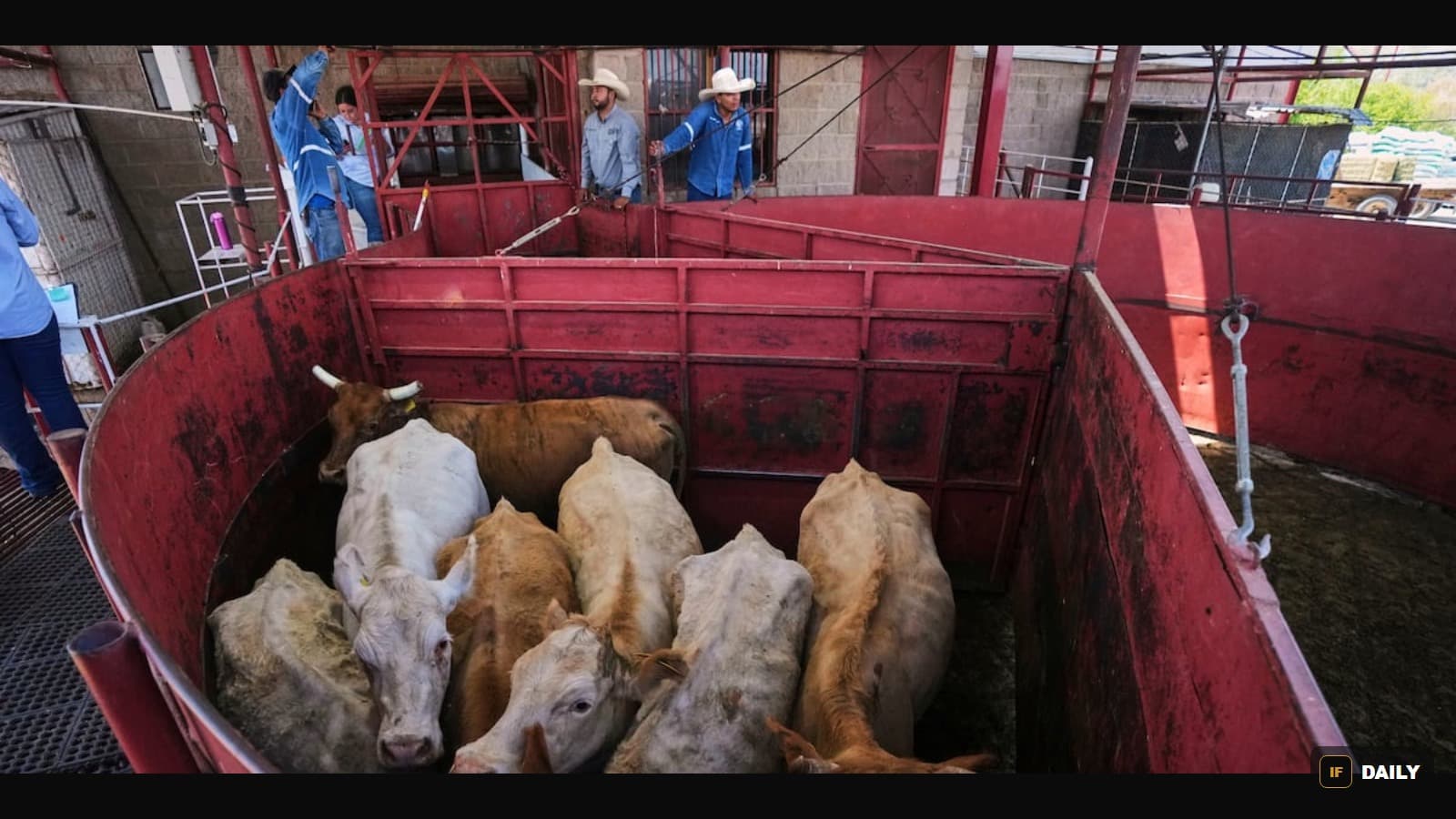
The United States reopened a border crossing in Douglas, Arizona to cattle from Mexico on Monday, part of a Trump administration push to bring down record-high beef prices, though economists are skeptical it will move the needle any time soon.
Why the border had been closed
The US Department of Agriculture halted cattle imports from Mexico earlier this year over the spread of the New World screwworm, a flesh-eating parasite that affects cattle, sheep, goats and dogs. The parasite, which the US had eradicated domestically by the 1960s and kept contained near the Panama Canal until late 2024, resurfaced in Texas on June 3, the first confirmed case there since 1966, with more than 40 cases since confirmed across southern Texas and southeastern New Mexico.
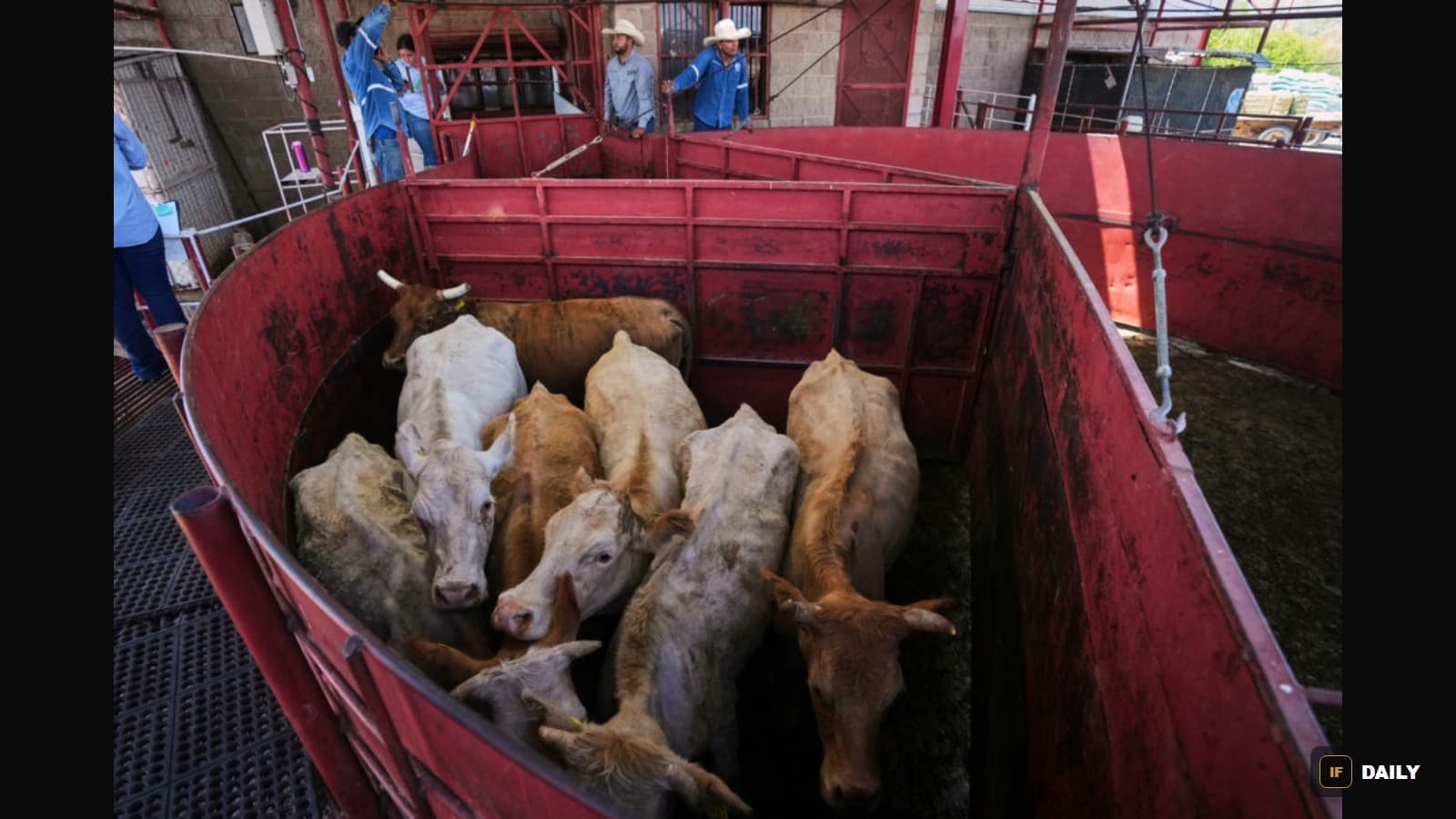
Each animal would be inspected and declared free of the parasite before crossing the border.
Brooke Rollins, US Secretary of Agriculture
Why prices probably won't drop soon
Agriculture Secretary Rollins said the Douglas crossing was chosen first because the neighboring Mexican states of Sonora and Chihuahua have stronger animal health programs than other regions, with crossings in New Mexico and Texas expected to follow over time. The USDA is planning a phased reopening that officials say will take months to restore import flows to their traditional levels; Mexico has typically supplied about 1.1 million head of cattle a year, roughly 3% of the total US supply.
"I don't expect to see any measurable impact on cattle prices or beef prices soon," said Derrell Peel, an agricultural economist at Oklahoma State University, noting that rebuilding US herds takes years since cows produce only one calf annually, and that breeding heifers for reproduction pulls them out of the food supply, tightening availability even further during the recovery. The average price of a pound of ground beef rose nearly 57% between July 2021 and July 2026, from $4.39 to $6.89, peaking at $6.90 in May.