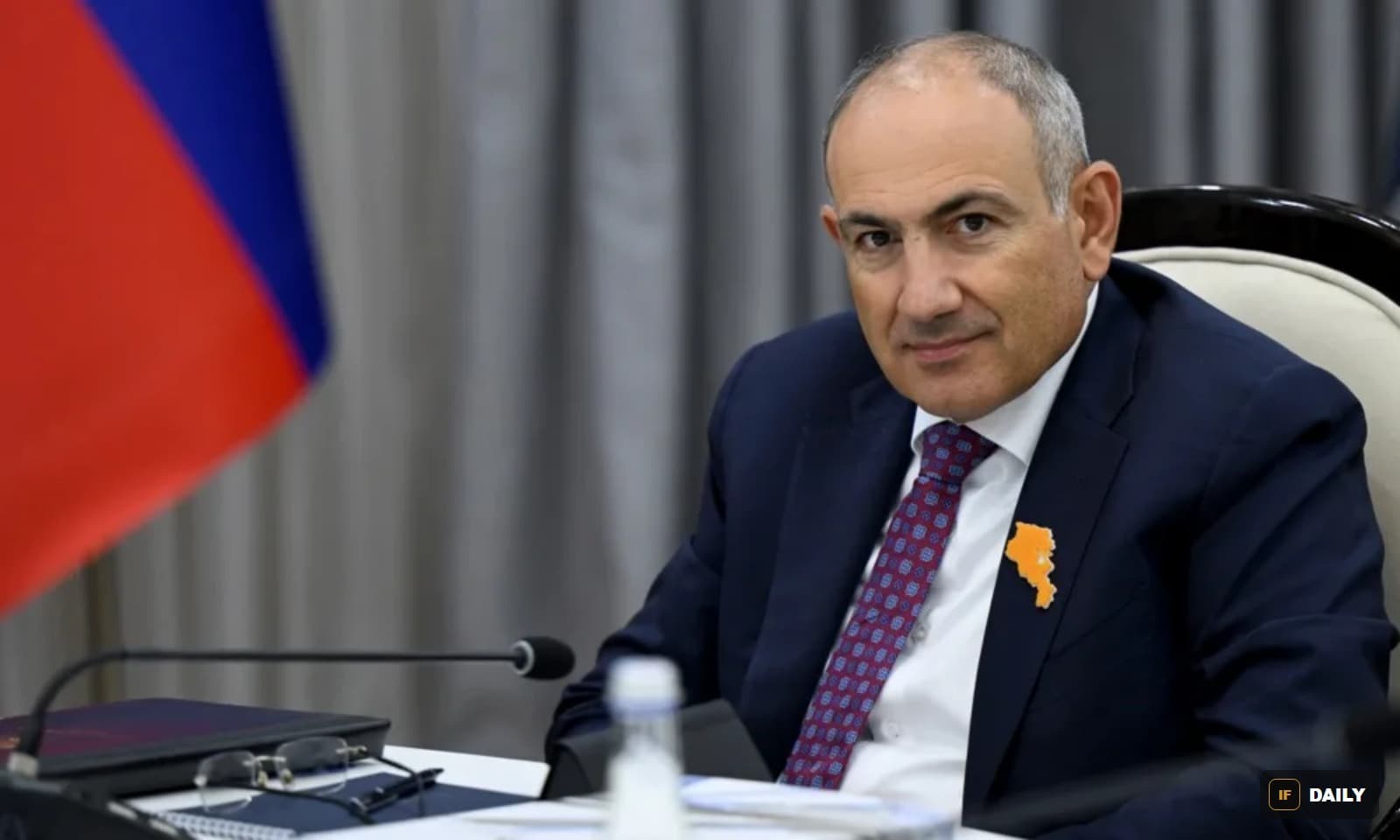
Armenian Prime Minister Nikol Pashinyan told parliament on Monday that his government will soon begin the formal process of applying for European Union membership, the clearest signal yet of Yerevan's shift away from Moscow's orbit.
What Pashinyan said
Presenting his government's 2026-2031 programme in Yerevan, Pashinyan said Armenia would submit an official EU application "in the near future." He was careful to lay out the sequence: Armenia must first lodge a formal bid, then wait for a response from Brussels and agree on a roadmap, before any referendum on membership could be held. Under Armenia's constitution, joining the EU or any other supranational bloc requires a public vote.
A widening rift with Moscow
The announcement lands amid an increasingly public falling-out between Yerevan and Moscow. Armenia's parliament already passed a bill last year formally beginning the EU accession process, though the government maintains that law alone doesn't count as a membership bid. Russia has restricted imports of Armenian agricultural goods since spring, which both Brussels and Yerevan describe as politically motivated. Kremlin spokesman Dmitry Peskov has objected to Armenia's EU push on economic grounds, arguing that EU and Eurasian Economic Union trade rules are incompatible, while Vladimir Putin reportedly urged Pashinyan in a July phone call to hold a referendum "as soon as possible," framing the choice as EU versus the Russia-led EAEU.
What the EU has offered so far
Brussels has moved to back Armenia's pivot: European Commission President Ursula von der Leyen held an EU-Armenia summit in Yerevan in May, and the EU granted expanded market access to Armenian exports in July. No date has yet been set for Armenia's formal application, and it does not currently hold EU candidate status.