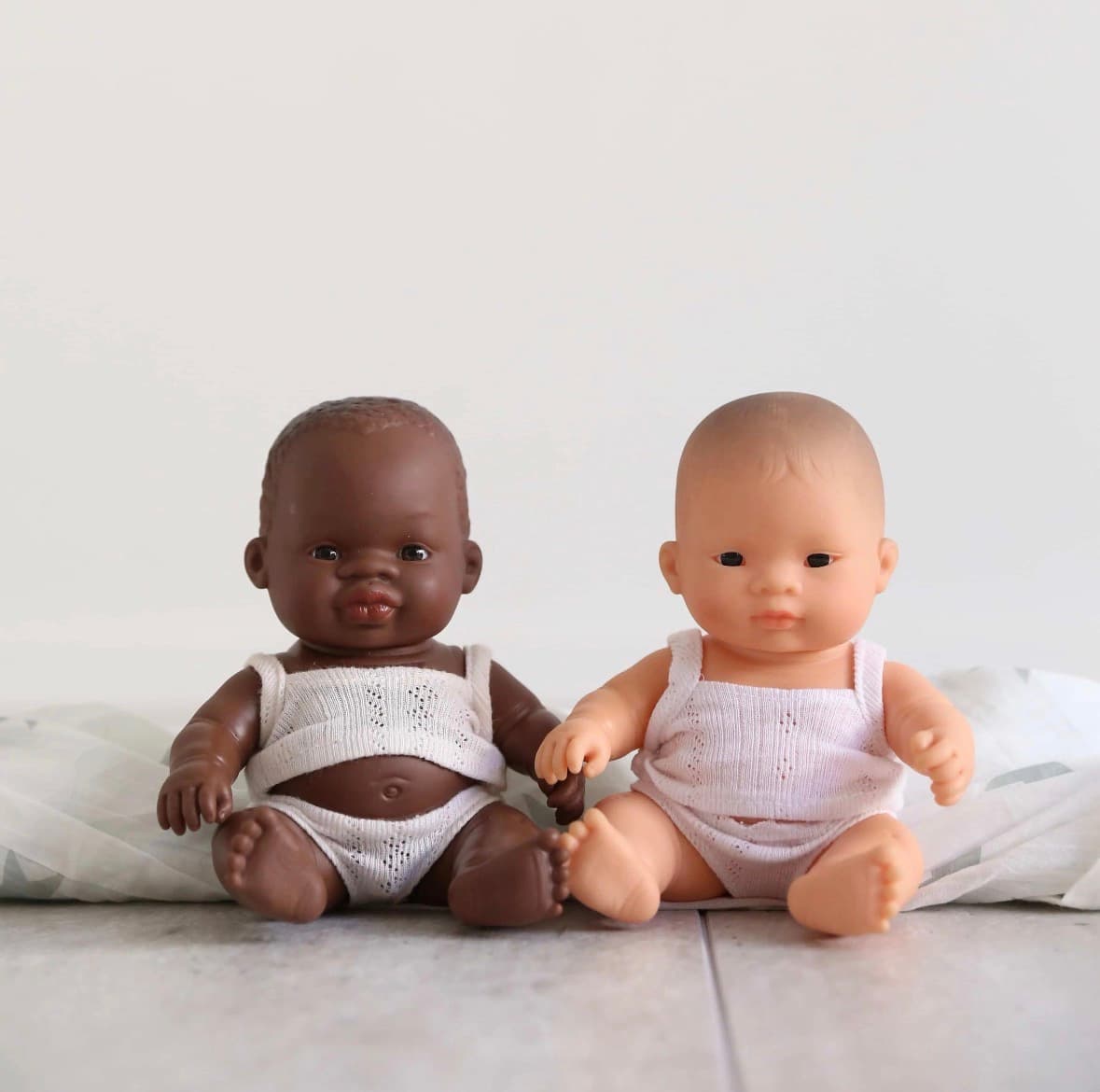
A video by Australian mum Jean Moyo comparing three Miniland newborn dolls has resurfaced online, bringing renewed attention to a debate over how Black children are represented in toys.
Moyo, who posts online as @jeanchronicles, filmed the dolls inside an Australian toy shop. The dolls were labelled African, brown and white.
In the video, Moyo questioned why the African doll appeared to have a wider nose and larger lips than the other two dolls.
She later clarified that she was not criticising the idea of creating dolls representing African children. Instead, she questioned whether the facial proportions of the doll accurately reflected a newborn child.
The original video attracted more than three million views, according to 7NEWS.
The discussion quickly divided viewers.
Some people agreed with Moyo's concerns about the design, while others argued that facial features naturally vary among children and that the doll could accurately represent some Black babies.
Moyo also pushed back against comments suggesting she should simply be grateful for representation.
"For those saying we shouldn't complain and be grateful we are represented, well these are African dolls and I'm African," she said.
Miniland, the company behind the dolls, describes its products as anatomically correct dolls designed to represent different races, genders and conditions.
The company told 7NEWS that its dolls are based on real children and that physical features naturally vary within every ethnic group. It also said it cannot create dolls representing every individual.
Moyo later highlighted Kmart Australia's Kindred Folk doll range as an example of representation she preferred.
The debate has resurfaced online, with viewers continuing to disagree over whether the Miniland doll's features are an appropriate representation of a Black newborn.
The original controversy dates back to 2022, rather than being a newly reported incident.