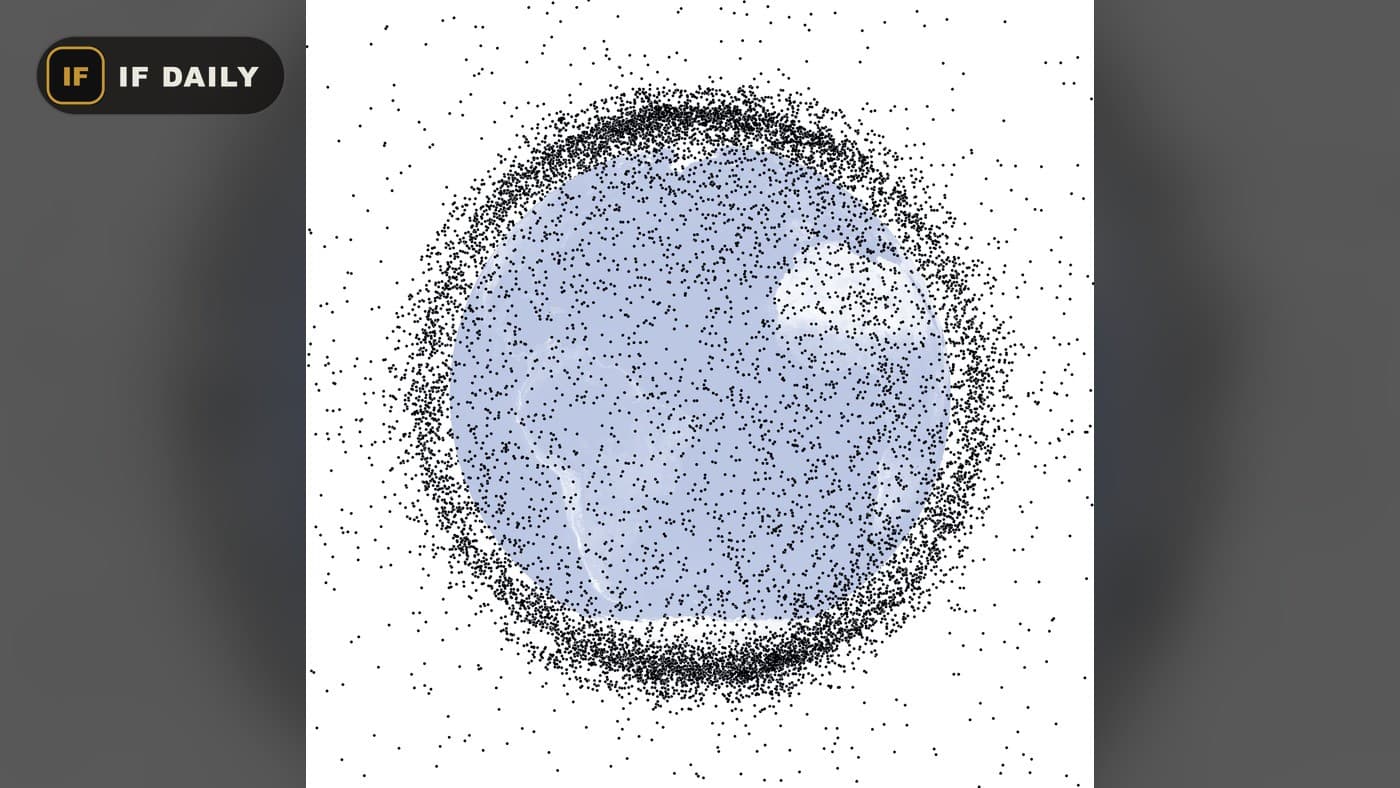
A Chinese reconnaissance satellite has broken apart in orbit, and the U.S. Space Force has cataloged 43 pieces of debris from it. The breakup was logged on Sept. 4, and the story is spreading again on social media.
What happened
The satellite is Yaogan-50 (02). It launched on March 15, 2026, aboard a Long March 6A rocket and reached a highly retrograde orbit, meaning it travels against Earth’s rotation, about 590 miles (952 kilometers) up, according to Gizmodo. On Sept. 4, the Space Force’s 18th Space Defense Squadron cataloged 43 debris objects from its breakup, MediaSat reported.
The fragments are spread between about 372 and 683 miles (600 to 1,100 kilometers) above Earth and remain in the satellite’s 142-degree orbit, according to Gizmodo.
What caused it
The cause is unknown. Jonathan McDowell, an astronomer at the Harvard-Smithsonian Center for Astrophysics who tracks spaceflight, suggested on X that a “battery explosion or an impact by space debris” may have been responsible, according to The Cool Down via Yahoo News. MediaSat reported that a propulsion or battery failure, or a collision with another object or with debris, are possibilities. None has been confirmed.

China has not publicly commented on the breakup, MediaSat reported.
How long the debris could last
Because the debris is so high, there is little atmospheric drag to bring it down. NASA has said that “for debris that’s orbiting at an altitude of 500 miles (800 km), orbital decay can take centuries,” as quoted by Gizmodo. Reports on this breakup say the fragments will likely stay up for decades or longer, and each piece is a collision risk for working spacecraft.
The breakup adds to a crowded orbit. The European Space Agency reports more than 56,000 tracked objects circling Earth, and about half are expected to remain indefinitely, according to The Cool Down via Yahoo News.