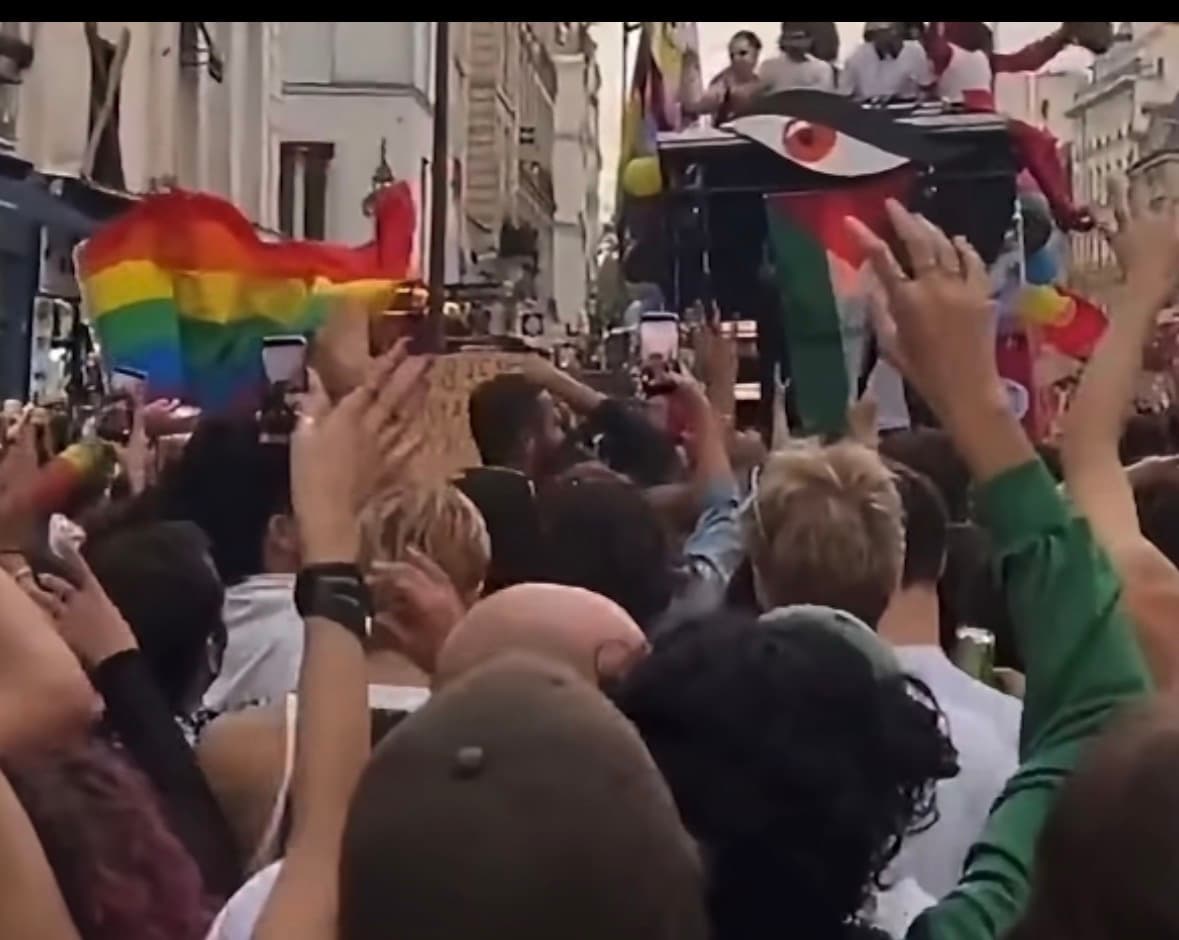
A wave of student protests is putting France under growing pressure, with fires, clashes with police and hundreds of schools facing closures — but a viral social-media post circulating about the unrest is making claims that go far beyond what has been independently established.
The protests began in September among high-school students, initially driven by complaints about teacher shortages, overcrowded classrooms, deteriorating school buildings and long school days.
What started around schools in the Paris region has since spread to cities across France.
By early October, the demonstrations had become increasingly confrontational in some locations. Students have blocked school entrances, set fire to rubbish bins and other objects, and clashed with police. Some school buildings have also been damaged.
The French Education Ministry said on October 4 that between 400 and 500 high schools could be fully or partially closed on Monday because security conditions had not been met.
Officials said 24 schools had been burned or ransacked since the beginning of the protests. That figure is significant, but it is very different from the impression created by social-media posts suggesting that schools across France are simply being set on fire.
The scale of the unrest is nevertheless substantial.
French authorities said nearly 5,000 people had been arrested since the latest escalation began, with about 85 percent of those arrested reportedly being minors.
The Education Ministry also said 170 students and 78 education workers had been injured since the protests began.
What are the students protesting about?
The movement has several grievances.
Students have complained about missing teachers, overcrowded classrooms, deteriorating facilities and demanding school schedules. Some have also criticized the wider education system and the amount of pressure placed on teenagers.
Reuters reported that the protests grew particularly strongly in disadvantaged areas around Paris, where students have complained about unequal access to resources and long-standing problems with school infrastructure and staffing.
The French government has acknowledged that some of the complaints are legitimate, while insisting that violence, arson and attacks on people cannot be justified.
Prime Minister Sébastien Lecornu has also announced government measures aimed at addressing problems in schools, including building conditions, school schedules and student participation in decisions affecting school life.
What about the viral claims about immigrants?
This is where the social-media version of the story becomes difficult to verify.
A viral post circulating online describes the unrest as a coordinated action by “Muslim and African immigrants” and portrays the scenes as evidence that France has completely collapsed.
IF DAILY could not independently verify that characterization.
Reliable reporting on the protests identifies the movement primarily as a nationwide high-school student protest over education and living conditions. There have certainly been violent incidents, arson and clashes, but that does not establish that the unrest is a coordinated campaign by African or Muslim immigrants.
French officials have instead been debating whether some outside political groups or activists have helped escalate parts of the movement. Education Minister Édouard Geffray has accused far-left activists of infiltrating or hijacking parts of the student movement — a claim that has itself become part of the political dispute.
That distinction matters.
There can be genuine protests, serious violence and criminal acts occurring at the same time without every person shown in a viral video belonging to the same group or sharing the same motive.
And the Eiffel Tower video?
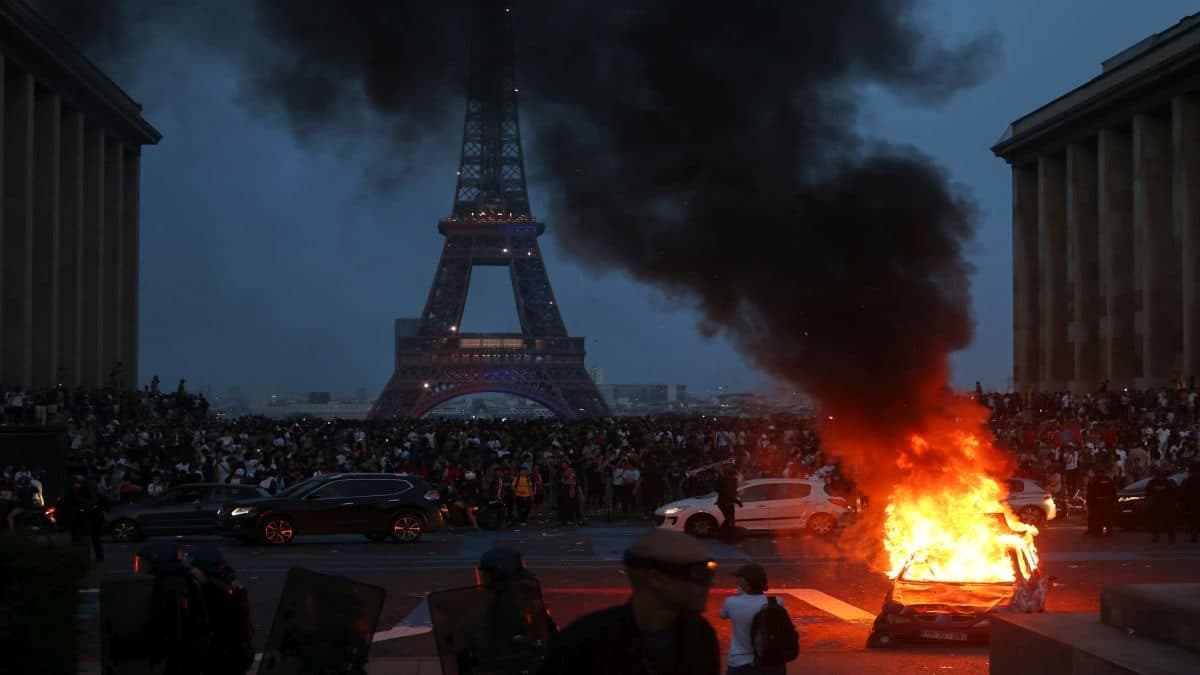
The footage circulating with the viral post shows a huge crowd near the Eiffel Tower, with smoke and what appears to be fire visible in the scene.
The video is striking, but IF DAILY has not independently established the exact date, location or circumstances in which the footage was recorded.
That means the footage should not, by itself, be used to prove the wider claims made in the accompanying social-media caption.
What is independently established is that France is experiencing a serious wave of high-school protests and that some demonstrations have turned violent.
As of October 5, the government is preparing for further demonstrations, while hundreds of schools are expected to remain fully or partially closed.
The bigger question now is whether French authorities can address the problems that brought students onto the streets while preventing the protests from becoming even more violent.
For many students, the original complaint was about something much more ordinary than the dramatic scenes now filling social media: classrooms without enough teachers, overcrowded schools and buildings they say are no longer fit for purpose.
The images may be shocking.
But understanding what is actually happening requires looking beyond the viral caption.