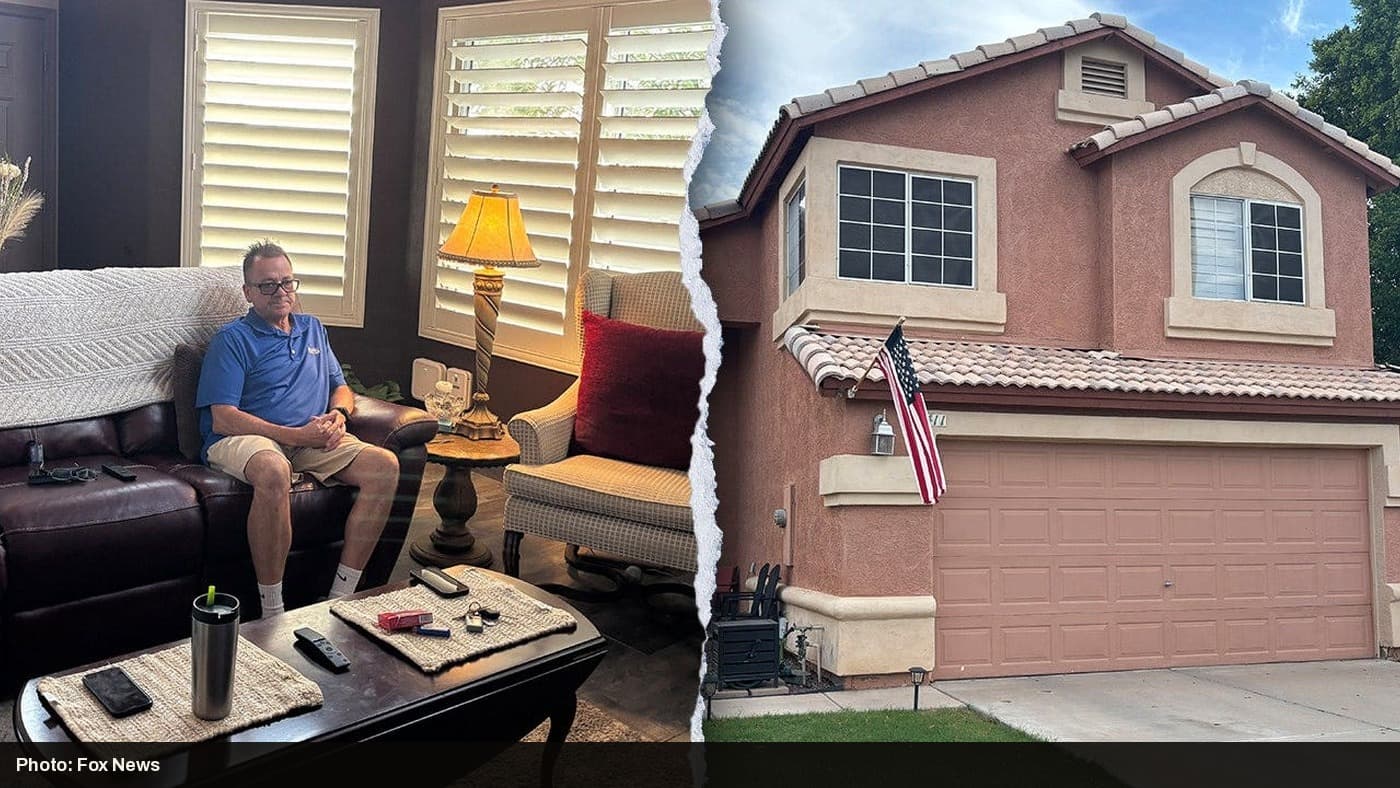
Toby Newton still sits on his own couch, in the four-bedroom house in East Mesa, Arizona, that he bought in 2022 for $475,000. The lamps still turn on. The recliner is still his. Technically, though, none of it is his anymore — his own homeowners association bought the house out from under him at auction, for $8,172, over a debt that started at $977.
"I was a year and a half behind because of the situation I found myself in with my girlfriend and myself getting sick. That's how it started," Newton, 53, said. In 2024, he lost his job and was diagnosed with diabetes. His partner, Sherrie Patten, 50, was diagnosed with breast cancer in early 2025 and later underwent a double mastectomy, going on long-term disability. Between the two of them, the $170 quarterly HOA assessment on their house was the bill that slipped.
He Tried to Set Up a Payment Plan
Newton says he didn't ignore the debt — he tried to negotiate it down while he and Patten dealt with everything else. He offered the Superstition Springs Community Master Association an extra $50 a month on top of his regular dues. Rejected. He came back with $200 a month. Rejected again. "They told me I had to talk to their attorney, and that's when it blew up," he said.
$977 Became $6,579
On November 15, 2024, the HOA's law firm filed to foreclose. A follow-up demand asked for $3,980 to make the lawsuit go away — $3,003 of it attorney fees, on an original debt of $977. Newton didn't appear in court to contest it; the HOA says it served the paperwork on his son. Newton disputes that he ever got proper notice. Without him there to fight it, the court entered a default judgment.
By the time the judgment was final, the number bore almost no resemblance to where it started: $1,311 in missed assessments and late charges, $1,042 in collection costs, and $3,345 in attorney fees, adding up to $6,579. In October 2025, the Maricopa County Sheriff's Office auctioned the house. The winning bidder was the Superstition Springs Community Master Association itself, for $8,172 — buying, for less than the price of a used car, a house worth roughly $450,000.
Arizona law gave Newton a redemption window to buy the house back, but at a price that had ballooned again: $10,484, due by May 15, 2026. That deadline passed. "I'm just trying to save it because I don't know how it could go from owing them $977 to $10,000," Newton said.
"Not Uncommon," Lawyers Say
Newton filed an emergency request to stay the sale on May 14, 2026, arguing he never received proper notice of the proceedings. As of mid-September, a judge had not yet ruled, and Newton and Patten are still living in the house. Legal experts say the case is extreme but not unheard of. "What surprises people is that the original debt can be relatively small," said Florida real estate attorney Romy B. Jurado. Edward Susolik, CEO of the law firm Callahan & Blaine, called the outcome "pretty extreme." Arizona bankruptcy attorney Casey Yontz said cases like it are, unfortunately, not uncommon.
Patten, still in cancer treatment, put it more plainly: "I am doing well today, but the emotional and financial toll has been overwhelming." The couple has since launched a GoFundMe, "Help Sherrie and Toby Save Their Home," which has raised roughly $25,798 toward a $30,000 goal. "We are holding on to hope that we may still have a chance to buy our home back," Patten said.
A Law That Came Too Late
Arizona did tighten its HOA foreclosure rules in 2025, raising the threshold for triggering foreclosure to 18 months of delinquency or $10,000 owed, and requiring associations to offer payment plans before moving to seize a home. Newton's case was already in court by the time that change took effect, so it doesn't apply to him. For now, he and Patten are waiting on a judge, still living in the rooms they aren't legally sure are theirs anymore.