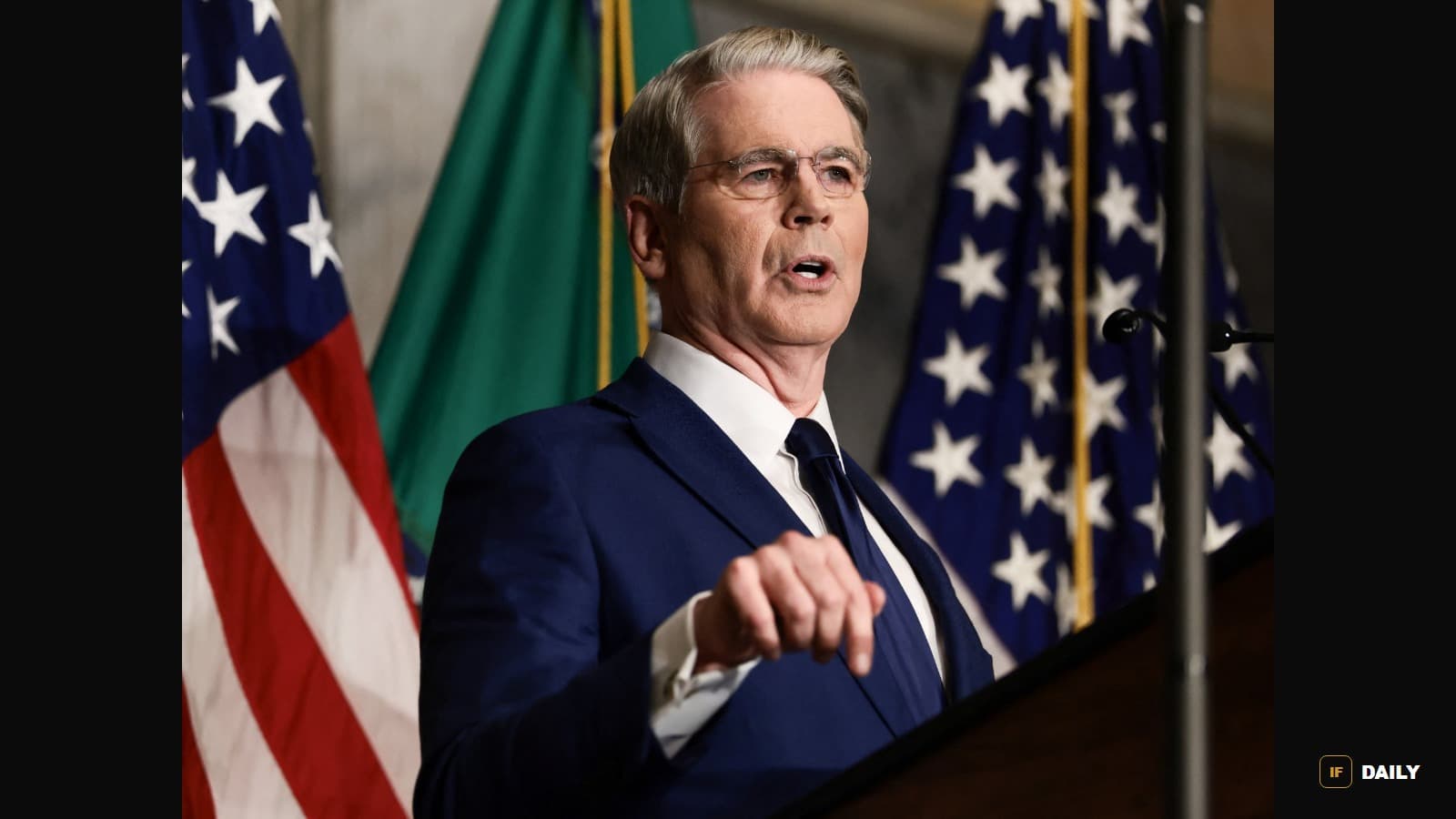
US Treasury Secretary Scott Bessent announced a new, wide-reaching sanctions campaign against Iran on Monday, calling it an "economic D-Day." The campaign, named Operation Economic Outcast, targets what the Treasury Department describes as five of Iran's most vital economic lifelines: digital assets, technology, gold, aviation and shipping.
Around the globe, our objective is to sever every economic lifeline that sustains this tyrannical regime. No one is above the reach of US sanctions.
Scott Bessent, US Treasury Secretary
According to the Treasury Department, the new measures impose sanctions on roughly 60 entities, vessels and individuals connected to Iran across the UAE, Hong Kong, China, Singapore and Switzerland. Bessent said the goal is to block any company that helps convert Iranian oil sales into revenue for the government in Tehran, warning: "If countries and entities facilitate transactions and are part of the ecosystem that turns Iranian oil into money, into repression, they will be targeted."
Iran's response
Iranian Foreign Minister Abbas Araghchi dismissed the move, saying, "They cannot think of any other solution in confronting the great Iranian people, so they repeatedly put forward the same old plans." A separate Iranian official was quoted by multiple outlets warning that Tehran would "retaliate in a seismic manner," and that any country joining the US sanctions effort would be treated as an adversary. IF Daily has not independently verified what form any Iranian retaliation might take.
Why it matters
The sanctions arrive against the backdrop of a US-Israeli military campaign against Iran that began in February 2026. Despite that campaign, previous rounds of economic pressure, including an April naval blockade, have not produced Iranian concessions on its nuclear program or on attacks in the Strait of Hormuz. Whether this latest push changes that calculus, or instead hardens Tehran's position further, remains to be seen.