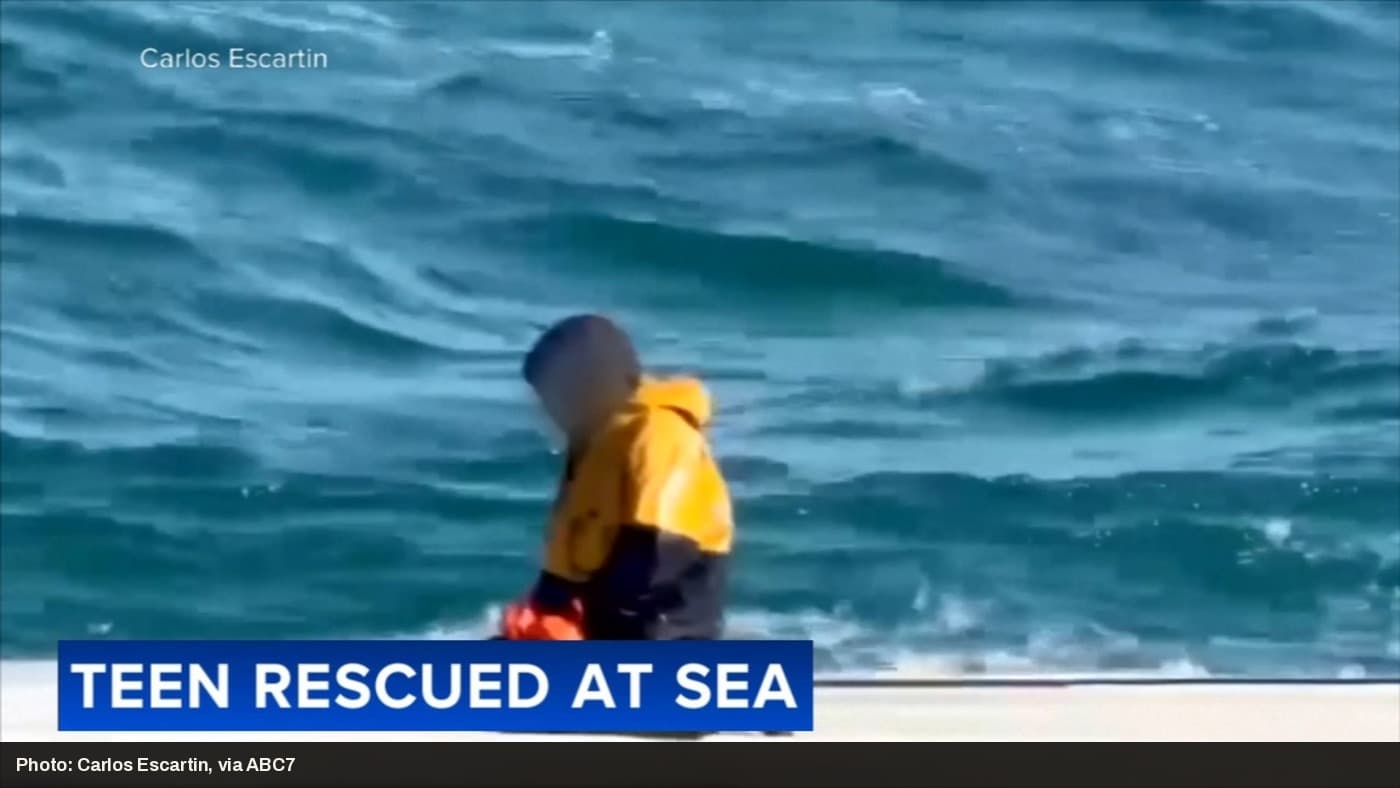
He set out from Savoonga, on St. Lawrence Island in the Bering Sea, on Friday, September 6, 2026, with his brother and cousin in an 18-foot fishing skiff. By Sunday, the boat hadn't returned and was reported overdue. On Monday morning, a Coast Guard aircrew spotted him — 15 years old, sitting alone on top of the overturned hull, roughly four miles from shore.
"Nothing Short of Miraculous"
His brother and cousin didn't survive. The teen had been clinging to the capsized boat for the better part of three days, in Bering Sea water that runs around 40 degrees. Lt. Cmdr. Jonathon Resch, the pilot who spotted him, didn't mince words about what that meant: "People don't flip boats and survive nights. They don't do it in warm water, let alone in water that's, you know, 40 degrees." He called the rescue "nothing short of miraculous" and, separately, "an emotional roller coaster."
How the Rescue Happened
Once the aircrew located him, they dropped flares and life rafts into the water to keep the site visible while a good Samaritan vessel, the Northwest Explorer, made its way to the scene and coordinated with the Coast Guard to bring him aboard. He was showing symptoms of hypothermia by the time he was recovered. He and the bodies of his brother and cousin were transported to Nome.
A Story the Coast Guard Says They Won't Forget
The Coast Guard has not released the names of the teen or the two crew members who died, and details of exactly what caused the boat to capsize haven't been made public. What has been made clear, repeatedly, by the people who found him: this isn't the kind of outcome anyone expects from three days on an overturned hull in near-freezing water. Resch's team called it the most improbable survival story they'd ever been part of — the kind of case that, by every normal expectation of cold-water survival, shouldn't have had a survivor at all.