For a few seconds on a red carpet in New Delhi, three of the world's most-watched leaders stood holding hands — and it wasn't the first time.
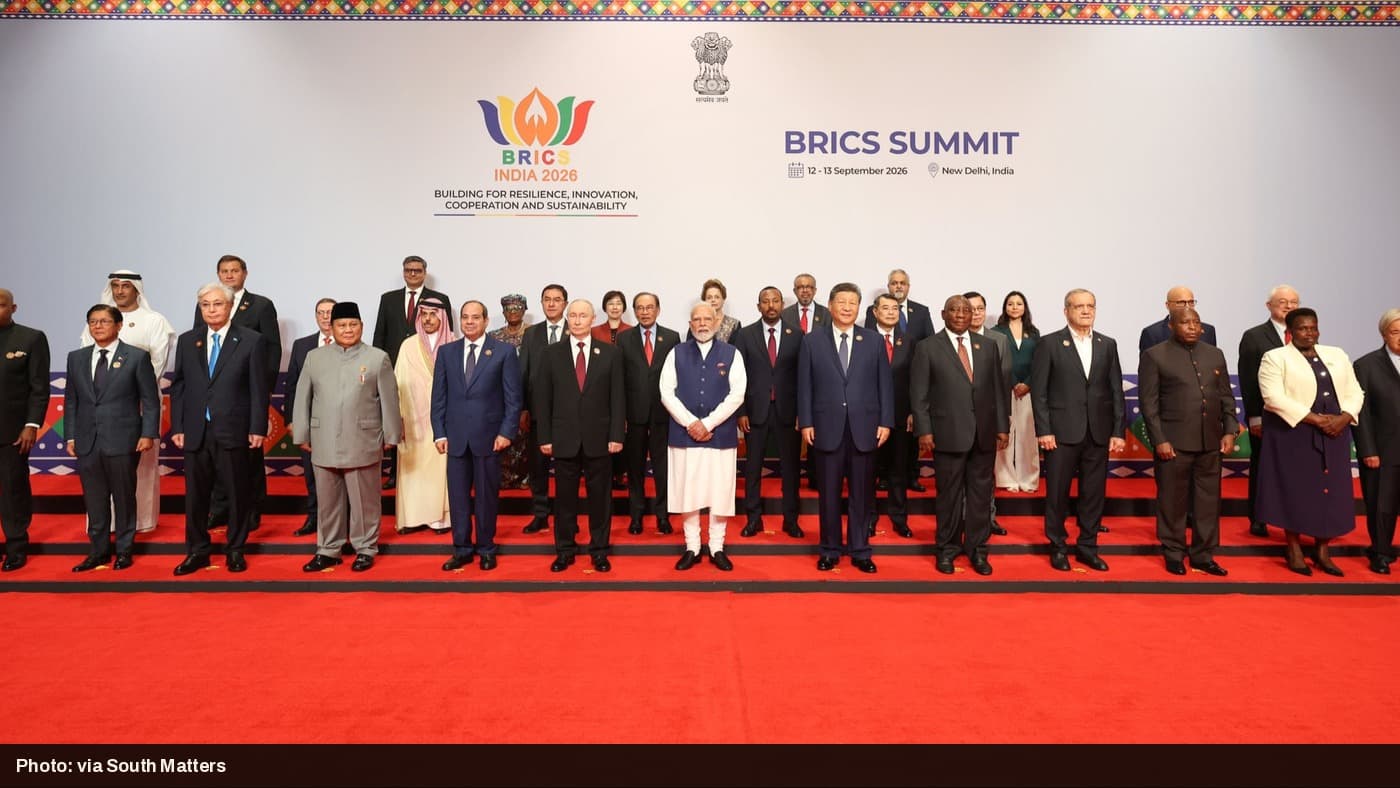
On September 12, 2026, Indian Prime Minister Narendra Modi, Russian President Vladimir Putin, and Chinese President Xi Jinping posed together at the 18th BRICS Summit, hosted by India at the Bharat Mandapam venue in New Delhi. Photos of the three leaders clasping hands quickly spread online, read by many as a deliberate show of unity among three of the world's largest economies.
A Summit Under India's Chairship
The two-day summit, running September 12-13, was chaired by Modi under India's 2026 BRICS presidency, with the theme "Building for Resilience, Innovation, Cooperation and Sustainability." Leaders and senior officials from the expanded BRICS bloc — Brazil, Russia, India, China, South Africa, Egypt, Ethiopia, Indonesia, Iran, and the United Arab Emirates — gathered for an official family photo before adopting the New Delhi Declaration 2026 and taking part in a tree-planting ceremony on the grounds.
Xi's First Visit to India in Seven Years
The summit marked Xi Jinping's first visit to India in seven years, a notable detail given the two countries' tense relationship since a deadly 2020 border clash in the Galwan Valley. Modi and Xi held bilateral talks on the sidelines, discussing economic and transport links and the countries' shared border. "Peace and stability along the border are important for the further development of bilateral ties," Modi said, according to readouts of the meeting.
A Gesture With a Recent Precedent
This wasn't the first time the three leaders have made this exact gesture in public. About a year earlier, at the Shanghai Cooperation Organisation summit in Tianjin, China, Modi and Putin walked in hand-in-hand and formed a tight circle with Xi — a moment that came just days after the U.S. had doubled tariffs on Indian goods to 50% over India's continued purchase of Russian oil. That summit's closing declaration included language opposing "unilateral coercive measures" that undermine international law, widely read as a veiled rebuke of Washington.
Seeing the same three leaders link hands again a year later, this time on Indian soil at a summit India itself was hosting, extended a pattern: a recurring, visual signal of alignment among Moscow, Beijing, and New Delhi at moments of friction with the West.
What the Summit Covered
Beyond the photo, Modi and Putin used their bilateral meeting to review cooperation across political, economic, defense, energy, space, and people-to-people ties, along with discussions of the conflicts in West Asia and the Black Sea and their impact on maritime trade. The bloc's members together represent more than 40% of the world's population and nearly a quarter of global GDP.