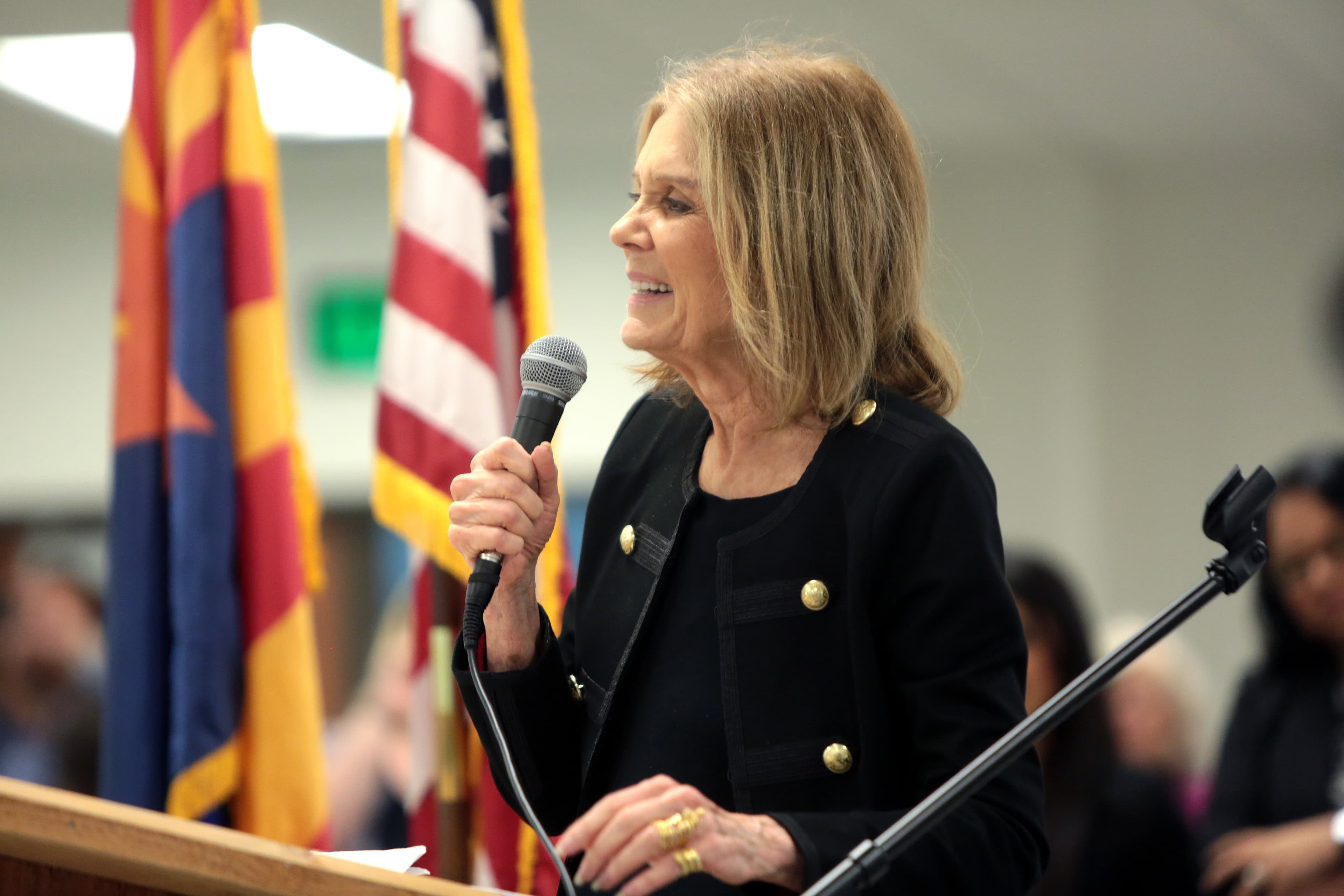
Before Gloria Steinem was the person magazine covers called "the world's most famous feminist," she was a 28-year-old freelance journalist who took a job as a Playboy Bunny at the New York Playboy Club — not because she wanted the job, but because she wanted to write about what it was actually like to have it. The resulting exposé made her name. It also previewed almost everything about how she'd spend the next sixty years: getting close enough to a thing to describe it accurately, then making it impossible to look away from.
She died Wednesday at her home in New York City, surrounded by loved ones, at 92. No cause of death was given.
From Toledo to a Movement
Steinem was born in Toledo, Ohio, and built her early career as a journalist — political columns, features, bylines in New York magazine, Esquire, The New York Times Magazine. That reporting instinct never left her, even as she became less someone covering a movement and more someone the movement was covered around.
Ms. Magazine
In 1972, Steinem co-founded Ms. Magazine, a publication built around the idea that women's issues deserved their own dedicated, serious press — not a page or two tucked inside a general-interest magazine. It became one of the defining vehicles of the women's liberation movement's second wave, and Steinem became one of its most recognized faces, testifying, organizing, and writing her way through decades of debates over reproductive rights, workplace equality, and what feminism was actually supposed to demand.
A Legacy Bigger Than the Headlines
Tributes poured in quickly from political figures across generations of the movement she helped build. But the honest version of her legacy was never simple hero-worship — Steinem spent decades being publicly debated over exactly what feminism should prioritize and who it should center, arguments she was frequently in the middle of rather than above. That friction was part of the work, not a footnote to it.
She kept working into her 90s. A woman who once put on a Bunny costume to describe what surveillance and objectification actually felt like from the inside spent the rest of her life doing the same basic thing at a larger scale — getting close to power, and describing exactly what she found there.