The U.S. House of Representatives has passed a bill that would give the Justice Department a broader mechanism for obtaining information from states when investigating alleged fraud involving certain federally funded programs.
The measure, H.R. 10326, known as the Preventing Rip offs and Obtaining Oversight of Funds Act, or PROOF Act, passed the House on September 16 by a vote of 217 to 207.
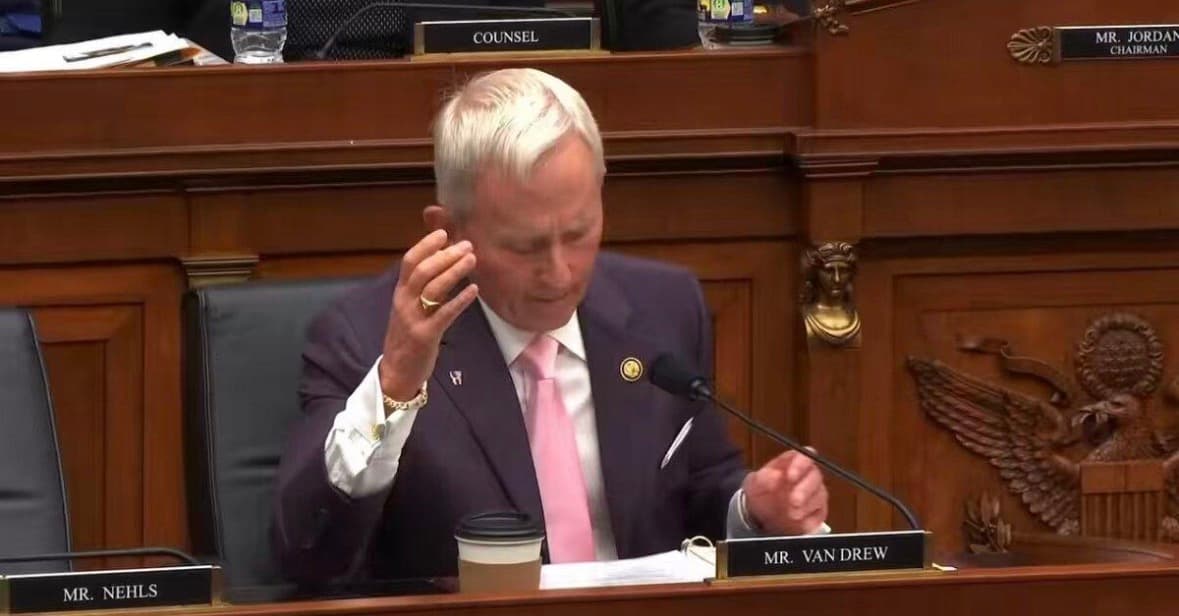
The bill was introduced by Representative Jeff Van Drew of New Jersey. Its stated purpose is to improve information sharing between federal law enforcement and state agencies during investigations and prosecutions involving alleged fraud in certain federal programs, while also establishing protections for individual privacy.
What the PROOF Act would do
Under the legislation, the head of a state agency administering a covered program would be required, upon receiving a written request from the Attorney General, to provide information required for investigating or prosecuting alleged fraud involving that program.
The programs listed in the legislation include Medicaid, the Supplemental Nutrition Assistance Program, commonly known as SNAP, and Temporary Assistance for Needy Families, commonly known as TANF, along with other federally funded programs.
The viral description that states would have to hand over any and all information needs some context. The actual language of the bill ties information requests to investigations or prosecutions of alleged fraud involving covered programs.
The bill also contains provisions addressing security, authorized access, privacy and limitations on how the information may be used.
The House vote
The House vote was closely divided.
H.R. 10326 passed by 217 votes to 207, according to the official House voting record.
The vote moved the bill out of the House, but it did not make the PROOF Act law.
What happens next
After passing the House, H.R. 10326 was received by the Senate on September 17. The Senate read the bill twice and referred it to the Senate Committee on the Judiciary.
The bill would still have to move through the Senate and complete the legislative process before it could become law.
For now, the key point is that the House has passed the PROOF Act, but the measure remains under consideration in Congress.
The legislation raises a broader question about how much information states should be required to provide to federal authorities when the Justice Department is investigating alleged fraud involving federal programs.
That debate will continue as the bill moves through the Senate.
Sources: U.S. House Clerk, Congress.gov/GovInfo, U.S. House of Representatives, and official congressional statements.