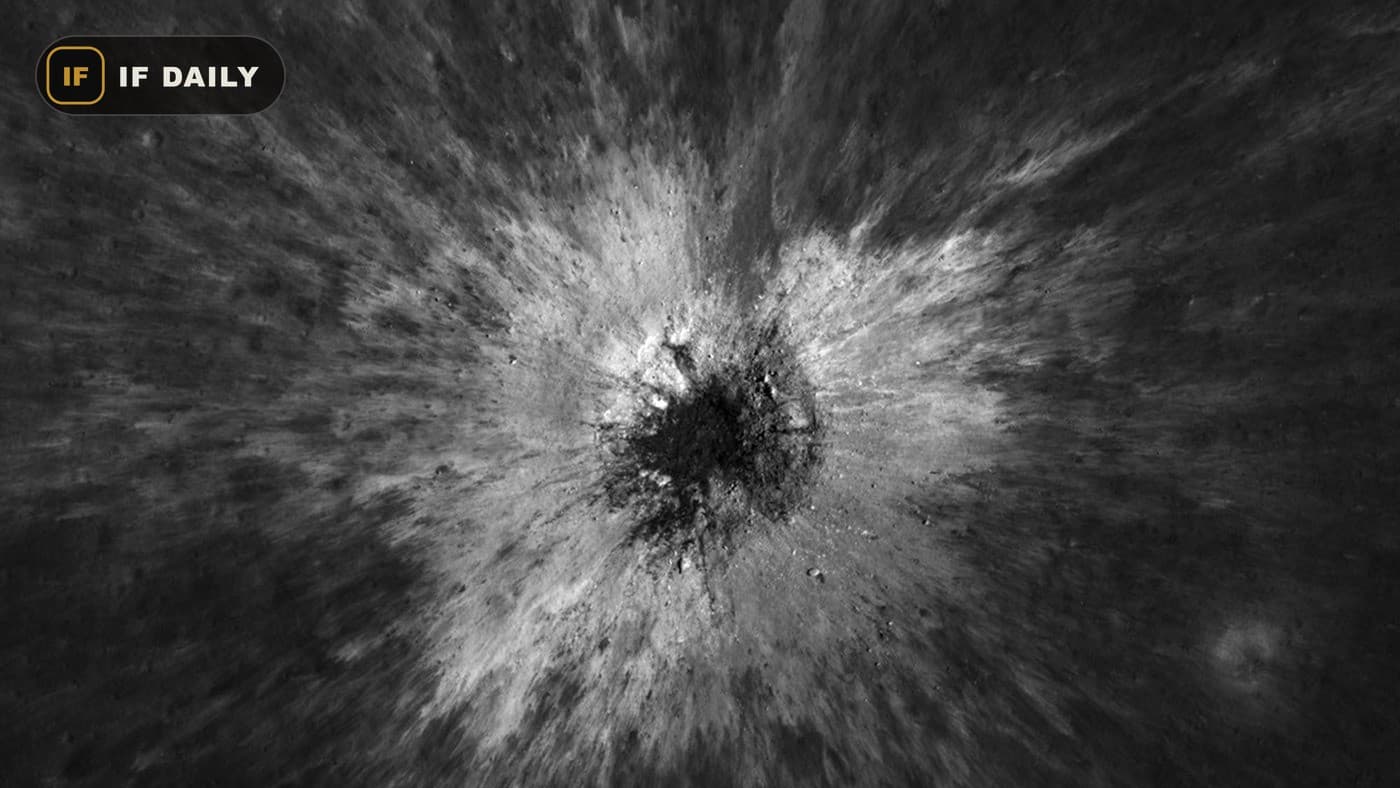
NASA says its Lunar Reconnaissance Orbiter has found a crater on the Moon that wasn’t there a couple of years ago, and it’s the largest newly formed crater ever found in the solar system.
The crater
The crater is named McGetchin, after the pioneering lunar scientist Tom McGetchin. NASA says it is about 728 feet (222 meters) wide and 141 feet (43 meters) deep. It formed sometime between April 11 and May 22, 2024, when a comet or asteroid fragment roughly the size of a three- to six-story building hit the Moon.
Around the crater, the images show a bright spot ringed by a dark halo of ejected material. NASA’s Diviner instrument also picked up a “cold spot” about 4 miles wide that is roughly 16°F cooler at night than the surrounding ground, an effect NASA attributes to the impact fluffing up the surface.
How it was found
Robert Wagner, a scientist with Intuitive Machines, spotted it on Oct. 24, 2025, while doing routine data-quality checks on images from the orbiter’s Wide-Angle Camera. He compared global Moon maps against software designed to highlight surface changes. “I just stopped, dropped everything, and started looking into what that spot was,” Wagner said, according to NASA.
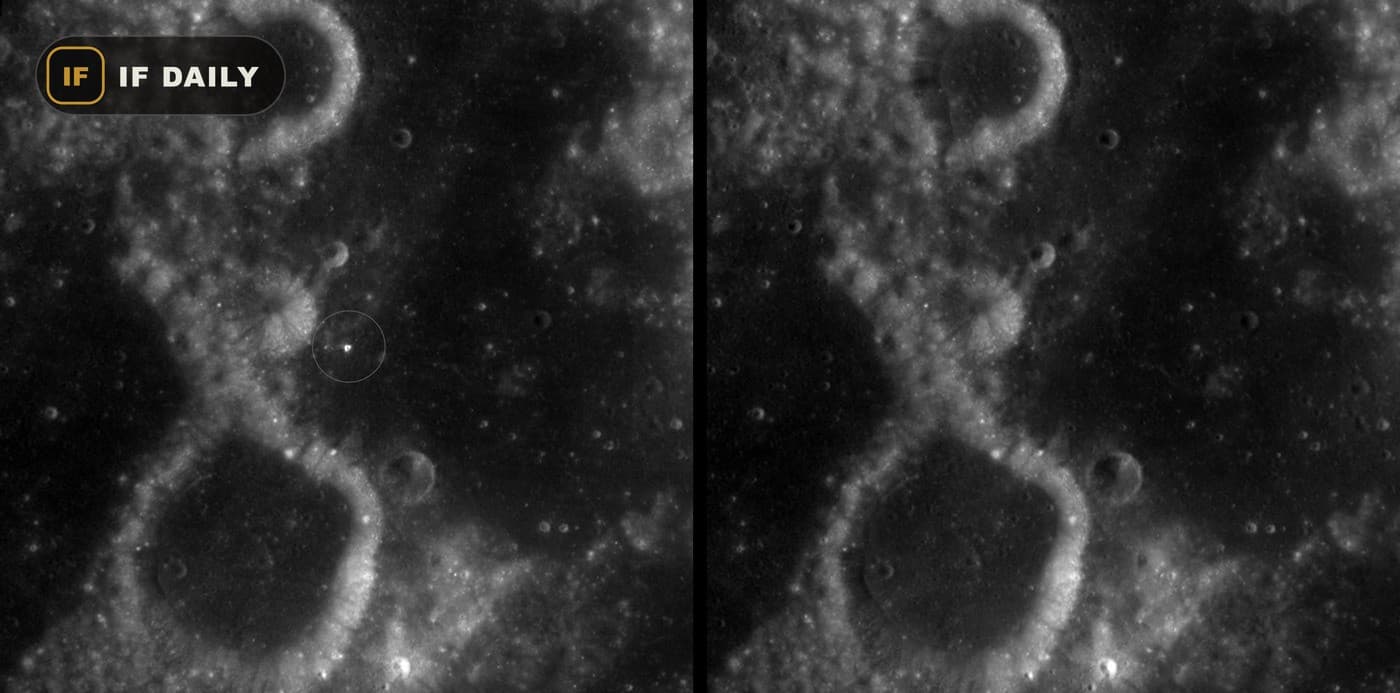
Sharper images from the orbiter’s Narrow-Angle Camera then revealed the crater in detail, at about 3 feet per pixel.
Why it matters
NASA describes the impact as a “once-in-a-century” event: scientists estimate that impacts of this size happen on the Moon roughly once every hundred years or more. NASA said the changes around the crater show that impacts alter the lunar surface, which matters for future rover operations as the agency works toward a sustained human presence on the Moon.