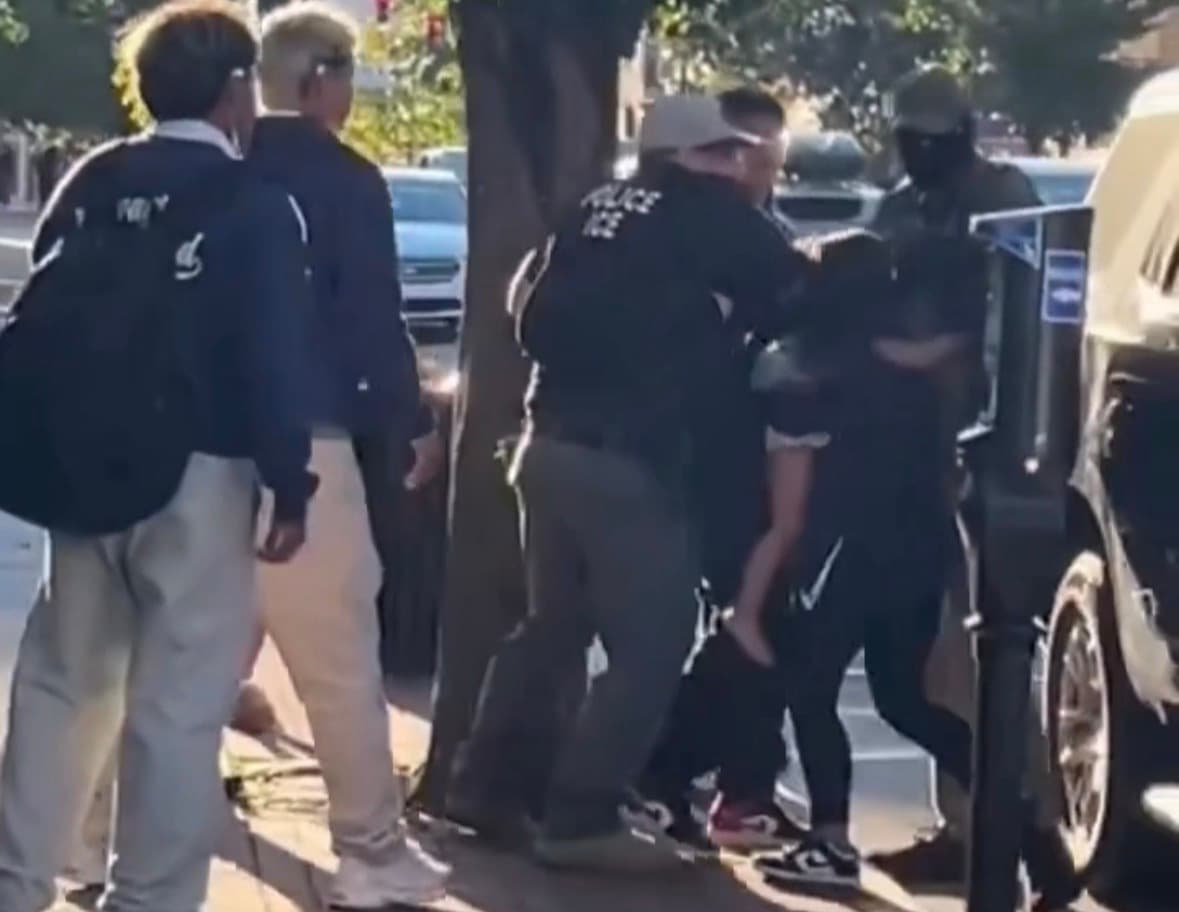
It happens almost every week now. A video surfaces of police restraining someone -- on a sidewalk, a subway platform, a college street -- and within hours the comment section splits into two camps that never seem to change: one side saying the officers were too rough, the other saying the person should have just complied. Somewhere in the middle, a phrase keeps showing up over and over: "police need more training."
One recent example making the rounds online shows several NYPD officers holding a man against a subway station pillar during what looks like a struggle. IF Daily could not independently confirm the date, the officers' identities, or how the encounter ended -- so this piece isn't about that specific clip. It's about the much bigger, much older argument it reignited, and what's actually true about how US police are trained.
The reaction is always the same split
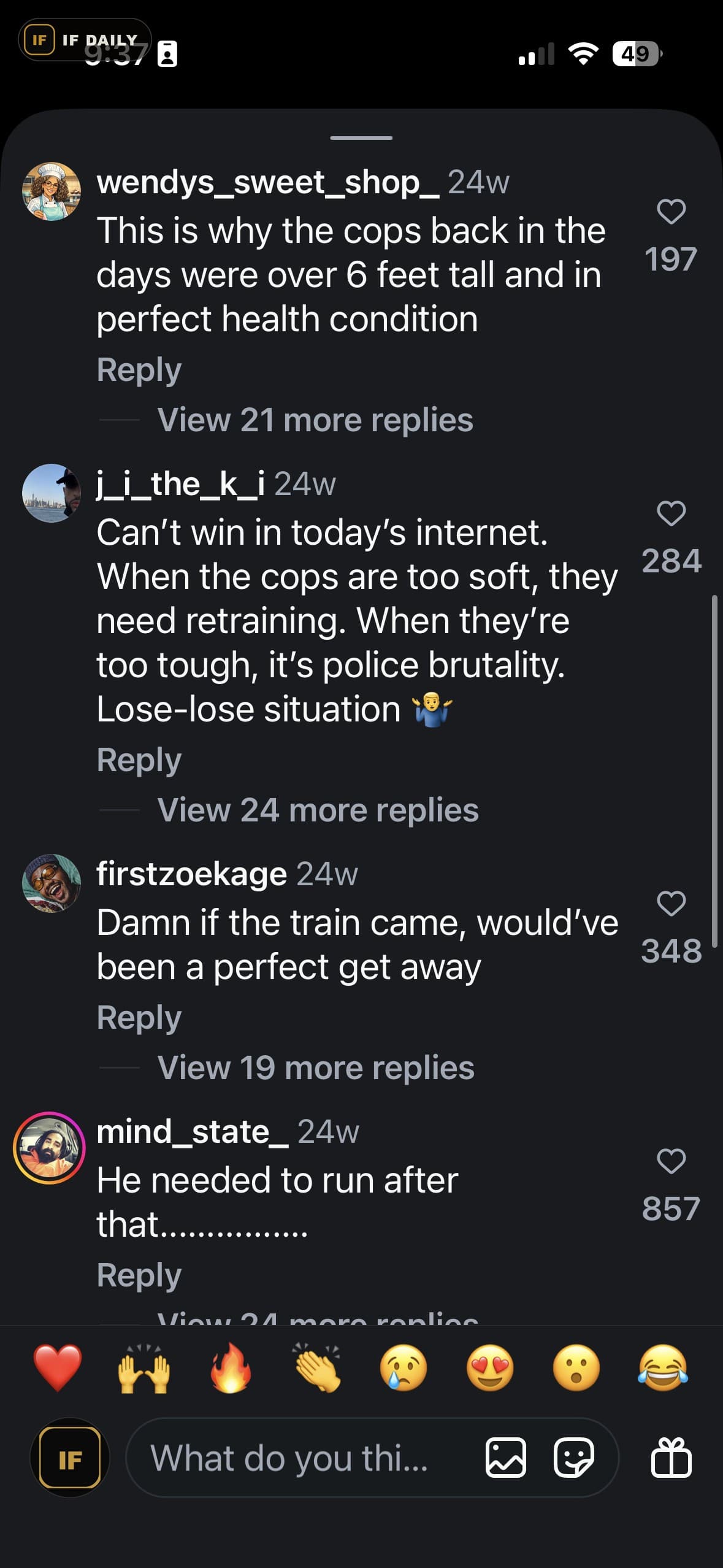
Scroll through the comments on almost any viral arrest video and the same arguments repeat. "Police need more training" is one of the most common, usually paired with some version of "three officers couldn't handle one guy." On the other side, commenters argue the person filmed should have simply followed instructions, or point out that bystanders rarely see what happened moments before the camera started rolling.
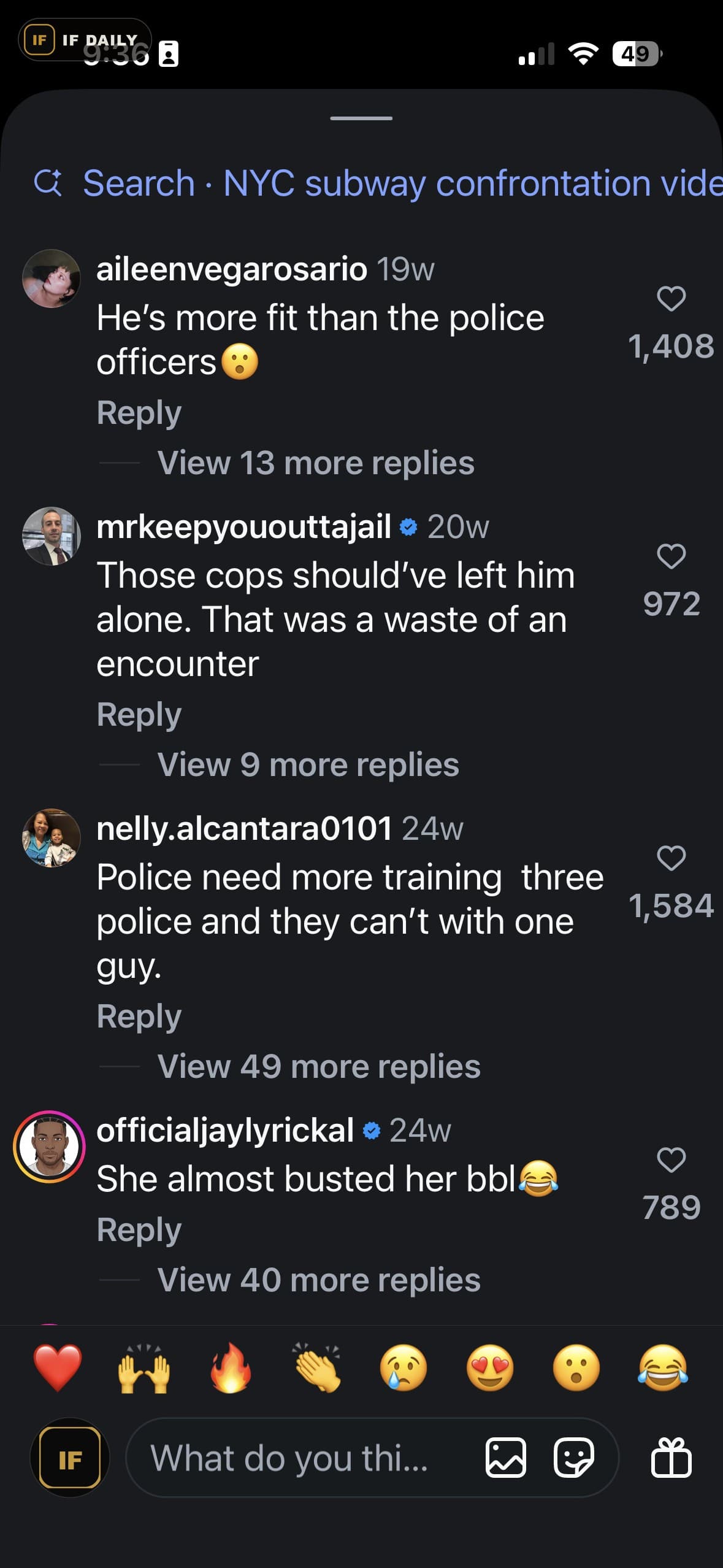
One commenter summed up the no-win dynamic well: "Can't win in today's internet. When the cops are too soft, they need retraining. When they're too tough, it's police brutality." Others focused on the physical mismatch, joking that the person being restrained looked "more fit than the police officers." A handful simply asked the question nobody in the replies seemed to be able to answer: "How did this end?"
A case where the facts actually are confirmed
Not every viral arrest video stays murky. On July 19, 2026, outside a bar in Tempe, Arizona, Arizona State University senior Eryn Bonner approached a group of officers who were restraining her boyfriend and a friend during a sidewalk confrontation. Video shows an officer repeatedly telling Bonner to back up before shoving her to the ground and pinning her against a police bicycle; she suffered bruising to her face. She was arrested and charged with misdemeanor disorderly conduct and hindering or interfering with police.
Maricopa County prosecutors declined to pursue felony charges. Bonner's attorney, Benjamin Taylor, has accused the city of Tempe of pursuing what he called a "political prosecution" meant to deflect from the force used by the arresting officer; Bonner has pleaded not guilty to the misdemeanor counts. The case is ongoing.
What US police training actually looks like
The "needs more training" reaction isn't just a feeling -- there's real data behind it. US police academy training averages roughly 840 hours, or about 21 weeks, before accounting for the field training most new officers complete afterward, which typically adds another 12-plus weeks and brings total training closer to eight months. Requirements vary widely by state: Maryland requires the most at 1,168 hours (30 weeks), while Oregon requires the fewest at 400 hours (10 weeks).
That's noticeably shorter than in many other developed countries. Finland and Norway both require officers to complete three-year police university programs before they're sworn in. Training content also skews differently in the US: one widely cited breakdown found American academies spend an average of 71 hours on firearms skills, compared with just 21 hours on de-escalation training.
Departments are already responding -- in some places
The training debate isn't purely theoretical for every department. In Juneau, Alaska, after a video of a violent arrest sparked public outcry and a protest organized with the Central Council of the Tlingit and Haida Indian Tribes of Alaska, the police department said it had updated its policies for requesting priority medical assistance and refreshed officer training on de-escalation and crisis negotiation. In Grand Rapids, Michigan, the police chief publicly responded after a separate viral traffic-stop video raised similar questions about officers' use of force.
What's confirmed, and what's opinion
To be clear about what IF Daily can and can't verify here: that US police academies average around 21 weeks of initial training, that several other countries require multi-year programs, and that Eryn Bonner was charged after the Tempe incident, are all confirmed facts from official and reported sources. That "police need more training" would have prevented any one specific viral encounter -- including the subway video that may be circulating right now -- is not something IF Daily is asserting as fact. It's the public's read on what they're seeing, shared by a lot of people, disputed by plenty of others, and, in at least a few documented cases, apparently shared by some police departments too.