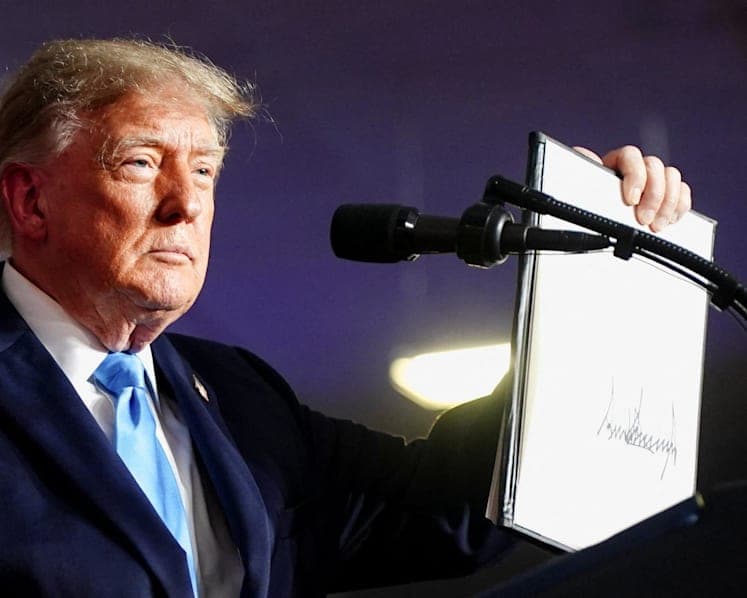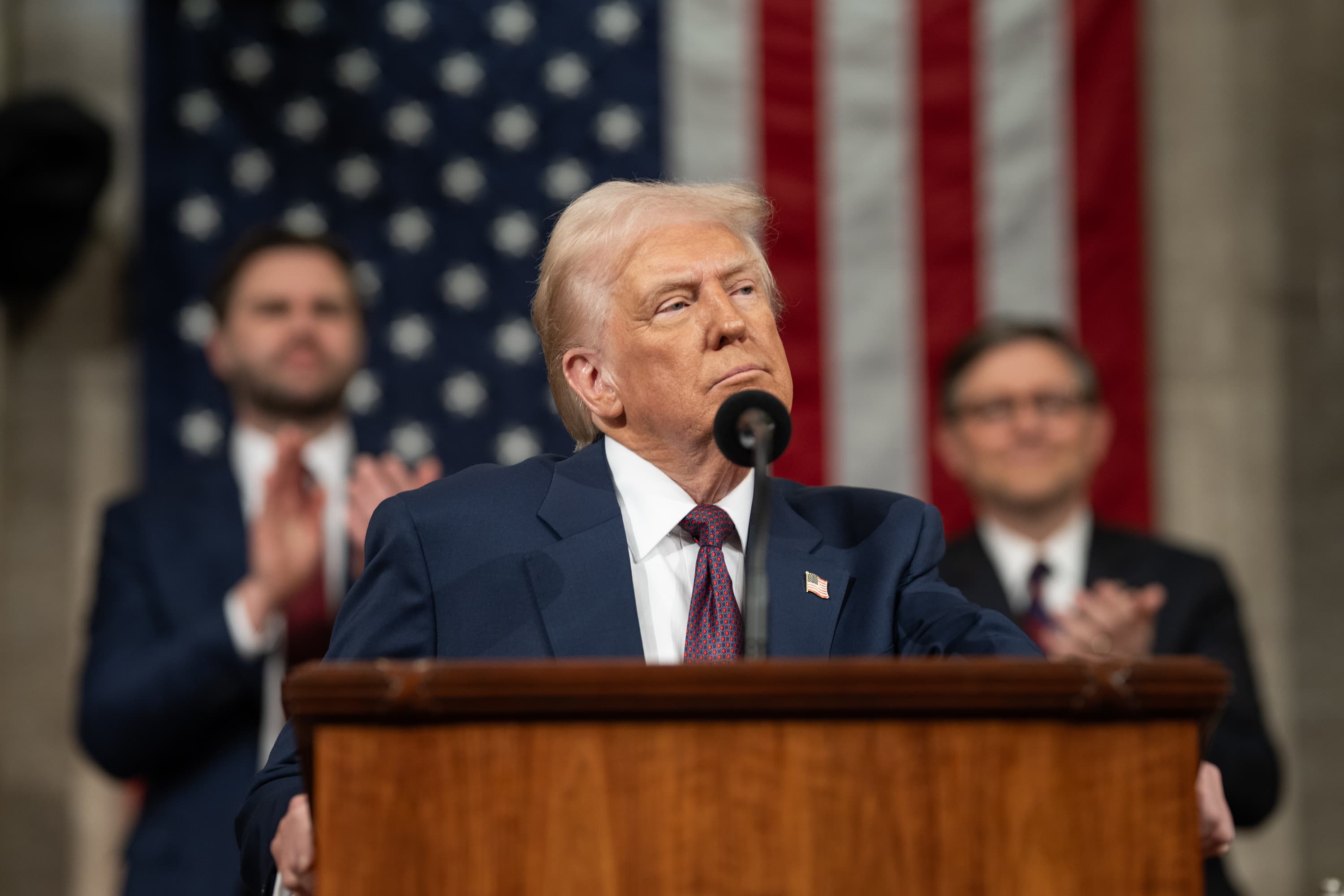
The stage in Dallas was built for a victory lap the party hasn't taken yet. Republicans are heading into a midterm they're widely expected to struggle in, and on Wednesday night, at a convention the crowd was calling "Trumpapalooza," the President made an offer designed to change that.
"If the Republicans win the House of Representatives and the United States Senate, both of them," Trump said, "because of our tremendous economic success — I will issue a dividend to every adult citizen in the United States of America for $5,000." He had a name ready for it: the Trump dividend. One rule attached — the money has to be spent in the US, not in Canada, Germany, or China.
Trump has floated a version of this before. For most of the past year it was a $2,000 "tariff dividend" — the idea being that revenue from his tariffs on foreign goods would be handed back to Americans as checks. He'd been inconsistent about it, at one point asking a reporter, "When did I do that?" On Wednesday the figure more than doubled, and the condition shifted from "tariff revenue" to "Republicans win."
The Math
Roughly 245 million adults are US citizens. At $5,000 each, the program would cost more than $1 trillion. For comparison, the government has taken in just under $500 billion in tariff and excise revenue since last year — and more than $100 billion of that is being refunded after the Supreme Court struck down many of the tariffs. "We don't have surpluses to give away," said Marc Goldwein of the Committee for a Responsible Federal Budget, pointing to roughly $2 trillion in annual deficits against $40 trillion in national debt. A payout that size would also almost certainly need Congress to approve it.
Vice President JD Vance tried to fill in details within the hour, telling Fox News the checks would be at least partly tariff-funded and would likely exclude wealthy Americans — a narrower version than the "every adult citizen" Trump had described on stage.
Ohio Senator Bernie Moreno said he would "get a bill ready" to pass right after the election. Democratic National Committee chair Ken Martin called the announcement a "desperate attempt" to salvage the midterms. Economists raised a separate worry: large direct payments, like the pandemic-era stimulus checks, are associated with pushing prices up.
For now it is a campaign promise with no legislation behind it, no funding identified, and a condition — control of both chambers of Congress — that voters will not settle until November. Whether the check ever arrives depends entirely on an election that hasn't happened yet.