He grew up in Wolfsburg. He told them that. They booed him anyway.
On September 3, 2026, Volkswagen's supervisory board approved what the company is calling the most strategically profound transformation in its 89-year history: another 50,000 job cuts, on top of 50,000 already agreed to since late 2024 — bringing the total to roughly 100,000 positions eliminated, alongside a plan to cut the company's vehicle lineup by as much as half by 2035.
The Confrontation Before the Vote
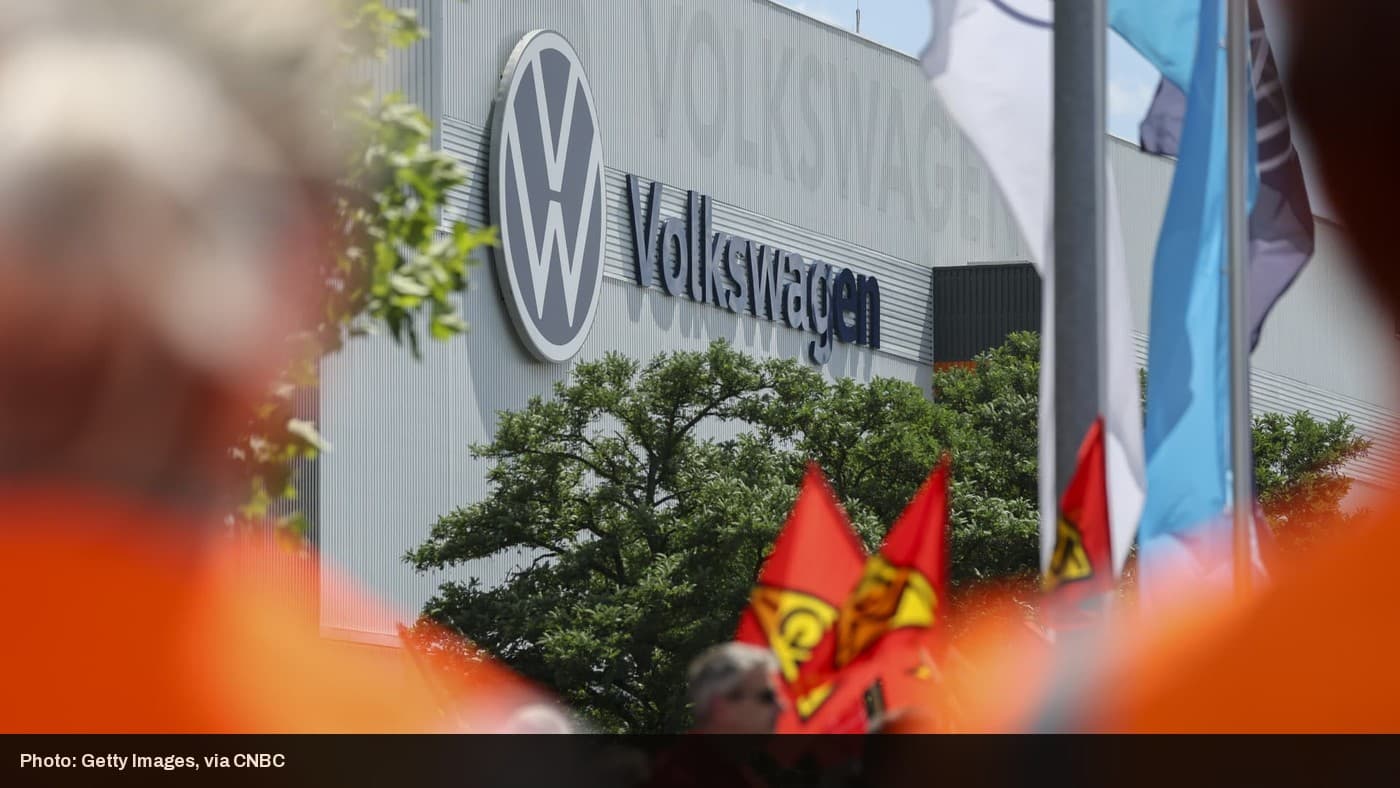
Before the board ever approved anything, CEO Oliver Blume had to stand in front of the workers it would affect. He addressed roughly 10,000 employees at VW's Wolfsburg plant, and the reception was hostile — workers booed and jeered him, including when he brought up growing up in the city himself. Labor chief Daniella Cavallo told the crowd plainly: "Our trust in this company's executive board, and especially in its CEO Oliver Blume, has been damaged. Not yet beyond repair, but damaged nonetheless."
Why Volkswagen Says It Has No Choice
The company points to a combination of pressures: tariffs raising the cost of shipping vehicles to the U.S., intensifying competition from Chinese automakers in Europe, and, according to Blume, a cost base roughly 20% higher than comparable competitors. The board's plan — internally called Future Plan 2030 — is built around 12 initiatives meant to close that gap, including consolidating a sprawling model lineup and reconsidering the future of several German plants.
The Numbers
50,000 new cuts represent about 8% of Volkswagen's global workforce as of the end of last year. Combined with the reductions already underway, the total reaches 100,000 — a scale of layoffs unprecedented for a single automaker outside of a bankruptcy. VW is targeting global sales of 9 million vehicles a year and a 9% operating margin by 2030.
What Happens to the Plants
Volkswagen has said it's considering alternative uses for several German factories where future production hasn't yet been secured for the years 2031 through 2034 — language that, in plain terms, means some facilities may simply run out of work to do well before the decade is over. Despite the turmoil, VW shares actually rose after the announcement, with analysts framing the board's willingness to approve cuts this size as proof the company can still make hard decisions despite its size and notoriously complex governance structure.